
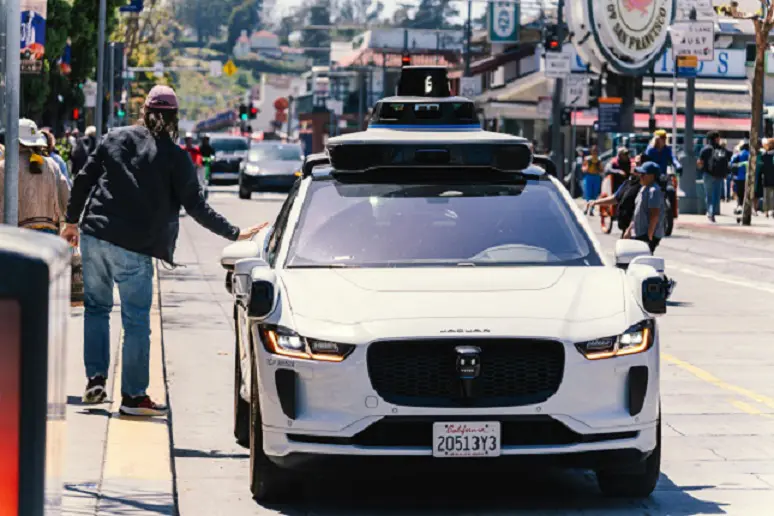
Driverless Cabs Are Hitting the Road
It has been around 6 months since I first noticed Waymo cars driving around Atlanta with their distinctive spinning lidar sensors on top, and no driver in the front seat! While unsettling at first, I now see 3–4 just about every time I drive across town, and I have grown used to passing them by without ever noticing a single issue. In fact, in my experience, they might be some of the most predictable and defensive drivers in the whole city, an observation which led me to select “yes” when presented with the option to participate in Uber’s partnership with Waymo a few months ago. It was not until a few weeks ago that I finally got my first experience riding in a Waymo, and after a very smooth ride, I found myself excited about what the future might look like for autonomous vehicles, on a shorter timeframe than I previously thought was realistic.
Waymo, now a household name in autonomous driving, began as Google’s experimental self-driving car project in 2009. It became an independent company in 2016 under Alphabet, and since then has quietly refined its technology from closed test tracks to bustling city streets. Its vehicles rely on a mix of lidar, radar, and cameras, a full suite of sensors that map the world in three dimensions, combined with sophisticated AI that reacts faster than a human could. Rather than selling cars, Waymo’s business model focuses on its ride-hailing fleet, offering rides through its own app or via partnerships with Uber.
Tesla, by contrast, has taken a sharply different path. While Waymo builds purpose-designed robotaxis, Tesla leans on its vast customer base of existing drivers. Its Full Self-Driving (FSD) system uses only cameras and neural networks trained on millions of miles of driving data. That approach makes Tesla’s system cheaper and easier to deploy, but also far more controversial, particularly when drivers treat “assisted driving” as full autonomy. Other players like Cruise and Zoox have followed closer to Waymo’s playbook, focusing on multi-sensor systems and city-by-city approval processes rather than blanket software rollouts. This creates a growing divide between those prioritizing scale and those prioritizing safety validation before expansion.
These next few years will likely determine who leads this race. Waymo’s cautious, data-driven approach may win regulators’ trust, while Tesla’s software-first model could give it a head start in user adoption. Yet both face hurdles from evolving legal frameworks and growing scrutiny from advocacy groups like SAVE-US, which call for stricter safety standards and greater transparency after several high-profile incidents.
Across the US and Europe, policymakers are now working to strike a balance, one that encourages innovation without leaving public safety to trial and error. This will be an interesting space to watch as competition heats up between autonomous vehicle players and regulators are forced to rapidly develop frameworks that allow adoption while ensuring safety.
Corey Erdoes, CAIA