
The Story Behind Halloween and the Cost of Celebrating
Halloween is one of America’s most recognizable holidays, filled with costumes, candy, carved pumpkins, haunted houses, corn mazes, and trick-or-treating. However, the holiday did not begin as the lighthearted celebration we know today. Its history stretches back centuries and reflects a mixture of ancient traditions, religious observances, immigration, and modern American culture.
Halloween’s origins are generally traced to the ancient Celtic festival of Samhain, which marked the transition from the harvest season into the darker part of the year. Over time, these older seasonal traditions became intertwined with Christian observances surrounding All Saints’ Day, celebrated on November 1. The evening before became known as All Hallows’ Eve, which eventually developed into the word “Halloween.”
Halloween traditions changed considerably as they crossed the Atlantic. European immigrants, particularly Irish and Scottish immigrants, brought customs and folklore associated with the holiday to North America. During the nineteenth and twentieth centuries, Halloween gradually developed into a community-centered celebration in the United States. Costumes, neighborhood parties, games, and eventually trick-or-treating became central features of the holiday. By the mid-twentieth century, Halloween was increasingly associated with children going door-to-door and receiving candy rather than with its older religious and supernatural traditions.
Today, Halloween is not only a cultural tradition, but also a major consumer event. According to the National Retail Federation’s 2026 Halloween survey, Americans were expected to spend approximately $13.5 billion celebrating Halloween this year, and the average consumer planned to spend about $115.14 on Halloween-related purchases.
The largest spending categories were costumes, decorations for homes and yards, and candy. The NRF projected that consumers would spend $4.4 billion on costumes, approximately $4.3 billion on decorations to make their homes inviting for trick-or-treaters, and another $4.1 billion on sweet treats.
Halloween is now much more than a night of ghosts and trick-or-treating. It is a centuries-old tradition that has evolved into one of the country’s most enthusiastic, colorful, and commercially significant celebrations. With evolving Halloween traditions come new ways to celebrate, and we are pleased to share with you a few ways in which our Firm participated in the weekend’s festivities:
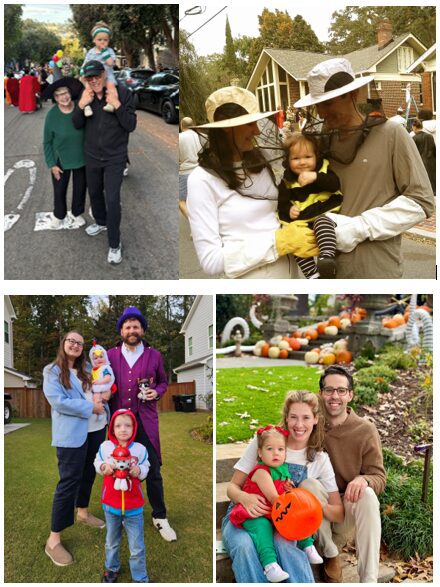
- On the West Coast, team members joined in at a neighborhood Halloween street party.
- In Atlanta, team members participated in the long-standing tradition of trick-or-treating, wearing coordinating outfits to match their enthusiastic little ones.
- Others decided to dress up and celebrate by attending a local music festival held at Piedmont Park.
- For the rest of us, we found that a quiet night at home while handing out candy to children and watching Halloween-themed movies was exactly what we needed.
Stay tuned for next year’s Halloween festivities. Don’t be scared!
Nirvanna Silva