
Railroads and the Gilded Age of Artificial Intelligence
Signs of the artificial intelligence revolution are becoming part of everyday life. AI now summarizes meetings, drafts emails, recommends what we watch and buy, improves smartphone photos, flags credit card fraud, routes deliveries, answers customer service questions, and more. Driverless cars are appearing in ordinary neighborhoods. What once felt futuristic is quickly becoming part of daily experience.
Some economic historians see a useful parallel between today’s AI boom and the railroad revolution of the middle to late nineteenth century. The comparison is not superficial. Both eras began with enormous capital commitments, sweeping productivity claims, speculative excess, and uncertainty over who would ultimately capture the gains.
The first similarity is scale. In the late nineteenth century, American capital poured into railroads with an intensity that reshaped the continent. Between the 1860s and 1890s, more than 160,000 miles of track were laid, roughly fifty-nine times the distance from New York to Los Angeles. At their peak, railroads accounted for approximately 60% of U.S. stock market value, much as today’s largest technology companies dominate market capitalization.
AI is attracting a comparable torrent of investment. Hyperscalers are committing hundreds of billions of dollars to data centers, chips, power, and cloud capacity, with spending expected to keep rising. This year, capital expenditures are projected to be approximately $800 billion. In 2027, they are expected to surpass $1 trillion, and cumulative spending could exceed $5 trillion by 2030. By that measure, AI is already the largest technology capital expenditure cycle in U.S. history, larger than the fiber optic buildout of the late 1990s and larger than the railroad buildout itself.
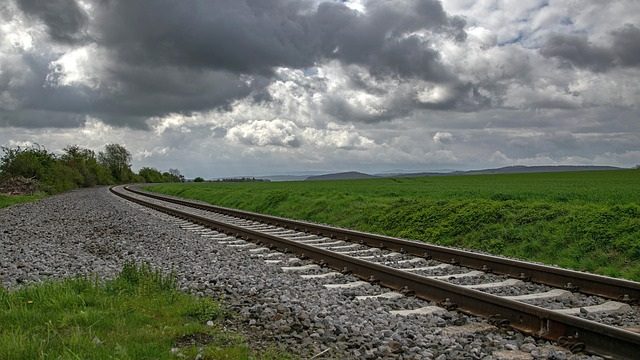
The second, and perhaps most important, similarity is that both revolutions required large infrastructure investments before profits were visible. Railroads demanded heavy upfront spending before revenues materialized, much of it financed with debt and stock issued against optimistic traffic forecasts. When demand fell short, overbuilding triggered rate wars, bankruptcies, and the Panic of 1893. Yet the tracks remained. They became the backbone of a national market and helped power the industrial economy of the twentieth century.
AI infrastructure reflects the same pattern. Companies are investing before profits are proven because they expect the technology to spread across the economy. Skeptics question the pace of enterprise adoption, the profitability of some AI services, and whether today’s costly hardware could become tomorrow’s stranded asset, just as poorly routed rail lines lost value after the industry consolidated.
There are also echoes of market power. Railroad barons such as Vanderbilt, Gould, and Harriman built empires by controlling chokepoints in transportation. Farmers and small shippers, dependent on rail access, often paid the price through monopolistic rates, eventually prompting the Interstate Commerce Act of 1887. In AI, a small number of firms control the computing power, cloud platforms, and leading models on which others increasingly depend. The same questions about pricing power, access, and regulation are beginning to reappear.
The differences are equally important. Railroads created a physical network with obvious and durable utility: a train could move goods regardless of who owned the track. AI’s core assets, including models, chips, and software, may depreciate faster. A leading model can be surpassed within months, and specialized hardware can become obsolete if the architecture changes. That makes the durability of today’s investment less certain than that of a nineteenth-century roadbed.
Still, the railroad analogy offers both a warning and a hope. The likely path may include overbuilding, a shakeout, consolidation, and then a long period in which the technology becomes ordinary infrastructure rather than a speculative frontier. Investors may lose money along the way, but society may still gain. The open question is whether AI follows the railroad pattern or whether faster obsolescence, new breakthroughs, or today’s seventh grader with tomorrow’s idea changes the track entirely.
Gary B. Martin