
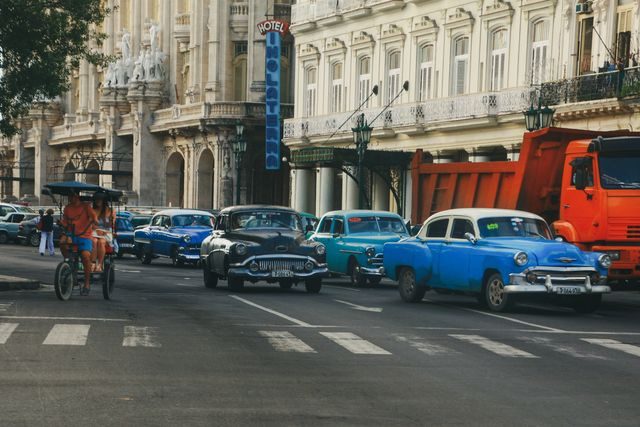
A Report from Cuba
Two months ago, I traveled to Cuba with three others on a mission trip to deliver basic medical aid—ibuprofen, vitamins, bandages, and water filters—and gain an understanding of what it’s like traveling to Cuba because we intend to return with more help. Our destination was the eastern city of Holguín with a population of 300,000.
Flying from Miami along Cuba’s northern coast, I was struck by the absence of coastal development. There were no marinas and zero boating activity—an eerie silence explained by strict restrictions on boat ownership to prevent escape. From the air, the country looked like a ghost town. Roads were few, mostly dirt, and virtually empty. I saw a field being plowed by an ox. The crops I saw were thin, which seemed odd for such a lush climate.
Landing in Holguín, ours was the only aircraft of any kind–an oddity for even a small airport in the U.S. Inside the terminal, the lights were off and there was no air conditioning. Welcome to Cuba. Our drive into the city was completely free of modern traffic, passing only bicycles, scooters, and donkeys pulling wagons.
If you disregard the cold showers, our Airbnb was comfortable, though frozen in a 1960s time capsule. Its infrastructure revealed the adaptations for survival. The house was dual-wired: one system for the grid and another for battery backup. For a decade, Holguín residents have survived on just four hours of electricity a day. Pinched by the recent oil embargo, that window shrank to three. Rainwater capture systems are another ubiquitous adaptation.
When I asked our host how he was able to run a business, he explained that he must forfeit half his revenues to a military general who he was in a “partnership” with. We were told that’s the only way one can have any sort of business.
Though Holguín is larger than Macon, Georgia, I saw just two stoplights and zero stop signs—a system that only works because private vehicles are scarce. While we were told Holguín is considered the nicest city in Cuba (and that Havana is just a façade), the reality was heartbreaking. The city was wall-to-wall squalor. Open piles of trash lined the streets, and the rivers were choked with garbage.
The economic distortions were jarring. At the nicest restaurant in town—affordable only to the government elite—the dining room seated fifty but possessed only four menus. Our entire meal, including appetizers and drinks, cost just $10 per person. By contrast, a local pizza costs a mere 60 cents. Realizing this, we bought extras to hand out to the indigent people on the streets.
The Cuban people we met love America. In the evenings the military was stationed at various intersections to discourage protest. Yet, U.S. flags and clothing were everywhere—a not so subtle defiance from a country that aches for its freedom. Cuba is a deeply impoverished country seemingly suspended in time. What struck me most was not the poverty, but the resilience of the Cuban people. One cannot help but wonder what they could accomplish if the barriers that constrain them were finally removed.
Jeff Buck